
Crooked opening reality
Older houses settle unevenly, and a door that was hung to fit a slightly crooked opening in 1957 won't necessarily tell you it's crooked until you put a square new door in it. We can shim and adjust for minor cases.
Norwalk, Costa Mesa
Norwalk's housing predates the Costa Mesa median by over a decade. See what that means for new door sizing, framing, and hardware on this job.
The repair
Costa Mesa's housing stock spans 1938 to 2005, with a citywide median build year around 1970 and most of the area's 34 named neighborhoods sitting in that 1960s-to-70s band.
Norwalk runs older than that midpoint - the median home here went up in 1957. That gap matters for a new install, not just as trivia. Openings framed in the late 1950s tend to run narrower than the double-wide bays built in the following two decades, and the jamb lumber is often shallower, which changes what track and spring size actually fit without shimming or reframing the opening first.
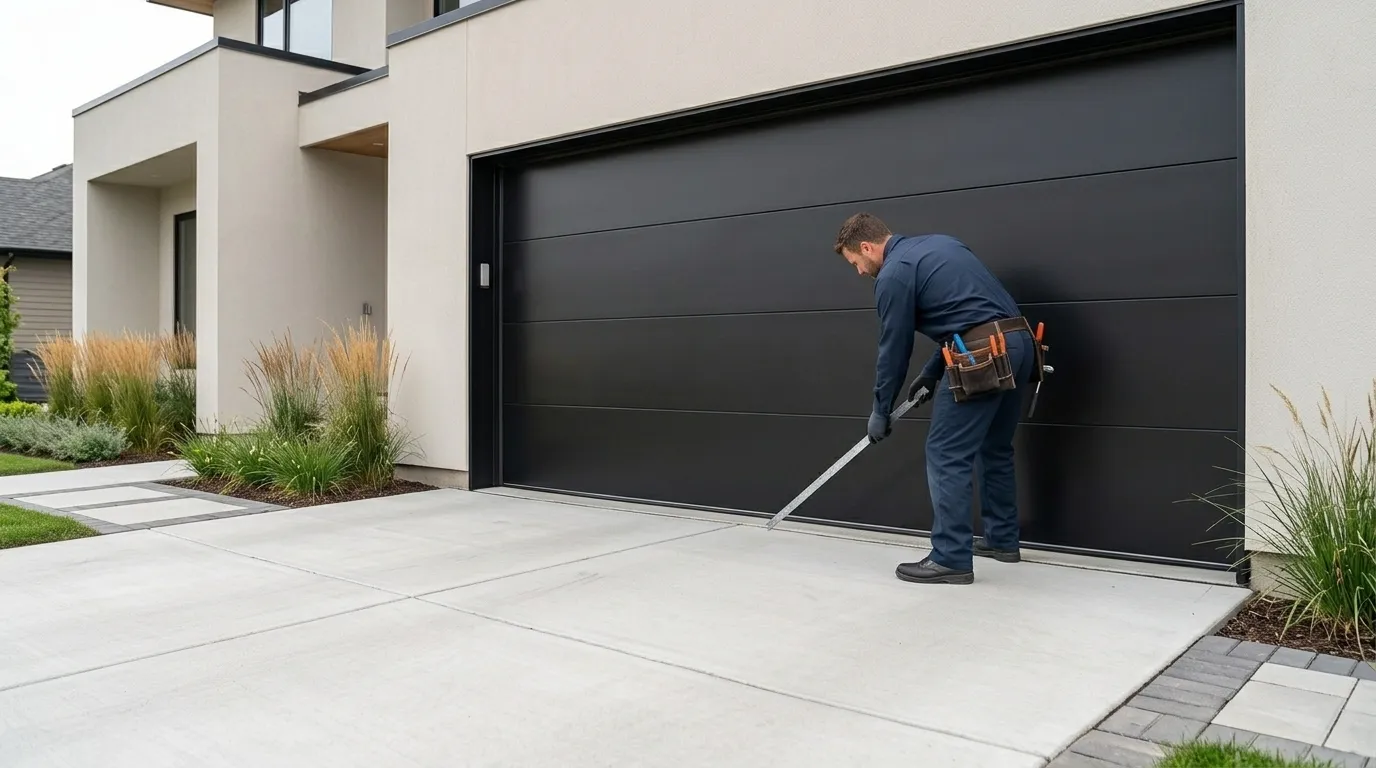
When we install a new door here, the first thing we check isn't the door - it's whether the existing opening was ever squared up for a modern sectional door at all, or whether it's still sized for the single flat panel that likely hung there originally.
Track brackets, torsion tube length, and header clearance all get measured against that older framing before we ever talk about which door goes on it. Skipping that step is how a door gets installed that binds on one side inside a year.
Symptoms
The call usually starts with a door that still opens and closes but looks and feels wrong for the house - a single-layer steel door with no insulation, visible daylight at the top corners, or a panel that's been replaced once already and doesn't match the rest. On a house built in 1957, that's often the original door design, not a repair issue. Owners notice it most in a few ways: the door feels heavy to lift by hand when the opener is off, it's noticeably colder or louder inside the garage than the house, or the finish has chalked and pitted in a way that no amount of paint fixes. None of that is an emergency. It's a sign the door has done its job for close to seventy years and the opening it sits in was never built with modern insulated sectional doors in mind. That's a different conversation than a broken spring - it's a full swap of door and track, sometimes hardware too, rather than a same-day repair.
Watch-outs
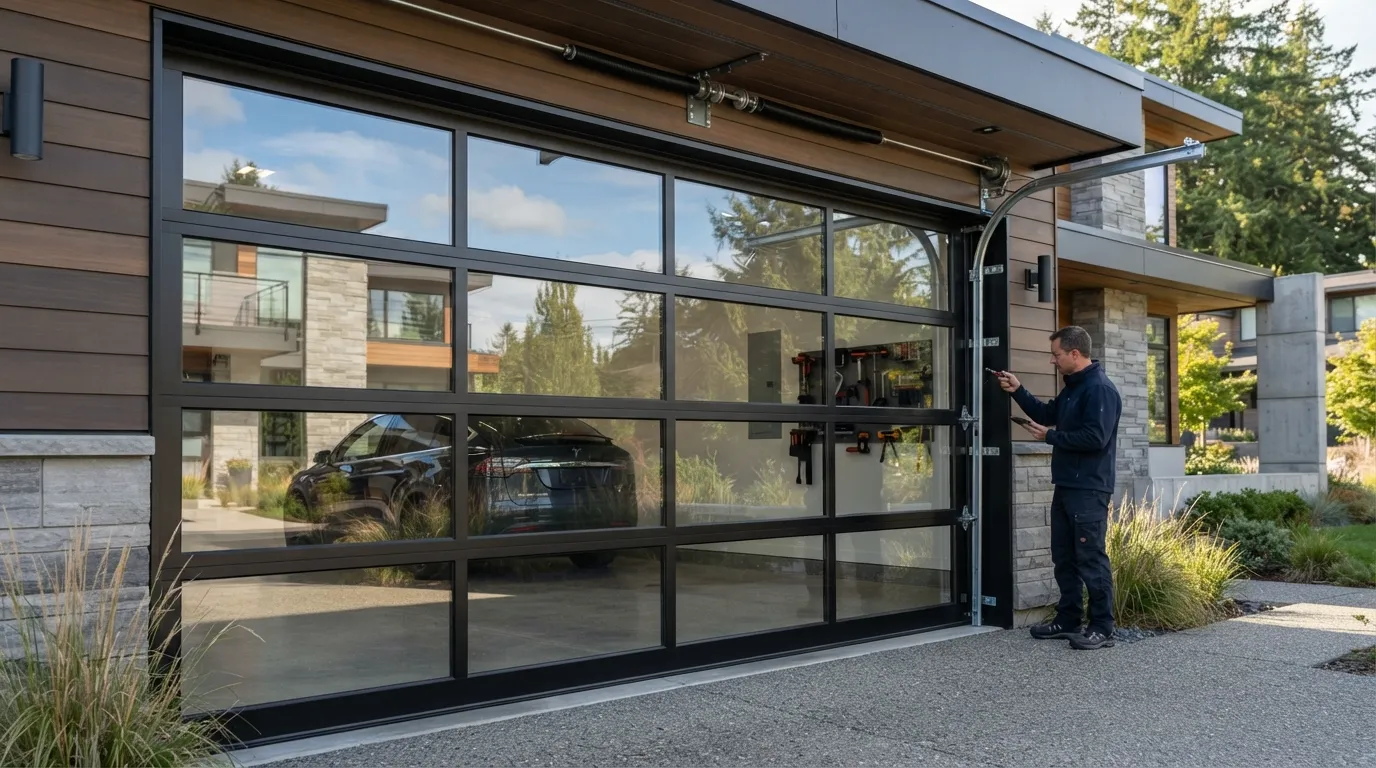
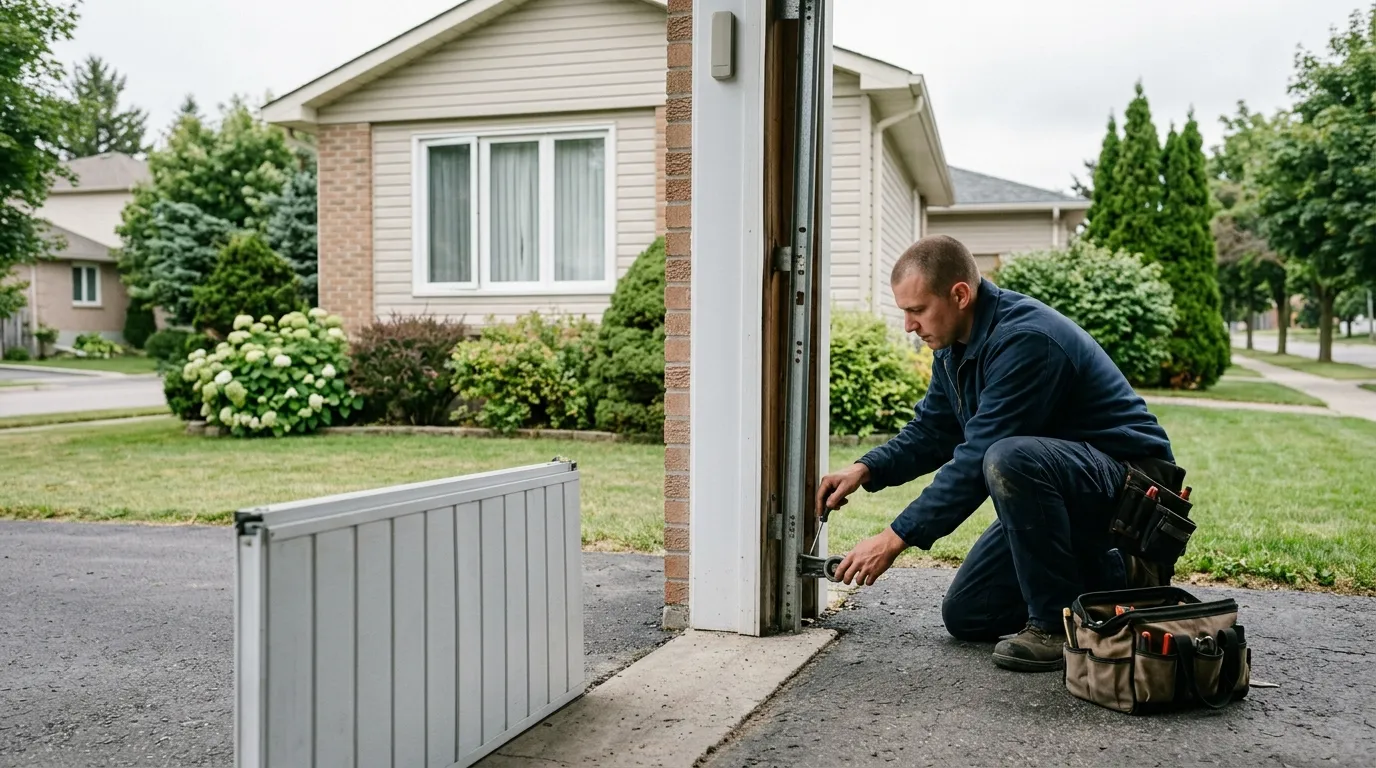
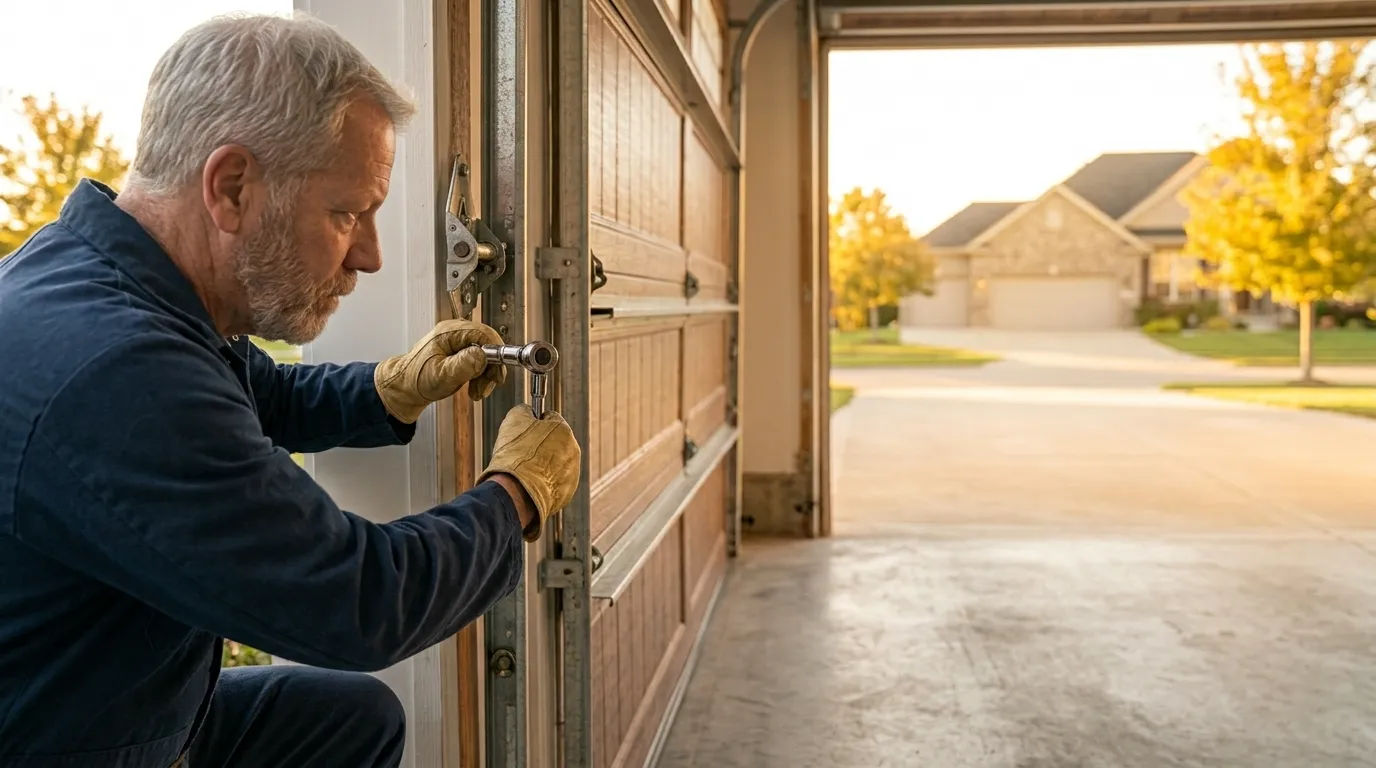
The most common surprise on a Norwalk install is framing that's shifted slightly over the decades - a jamb that's a half-inch out of plumb, or a header that's sagged just enough that a new door binds on close even though the old one didn't.
Older houses settle unevenly, and a door that was hung to fit a slightly crooked opening in 1957 won't necessarily tell you it's crooked until you put a square new door in it. We can shim and adjust for minor cases.
What we don't do is structural carpentry - if the header needs to be rebuilt or the jamb needs new framing, that's a contractor call before we come back to hang the door. It's an honest limitation, but it's better to know before the door's on the truck than after.
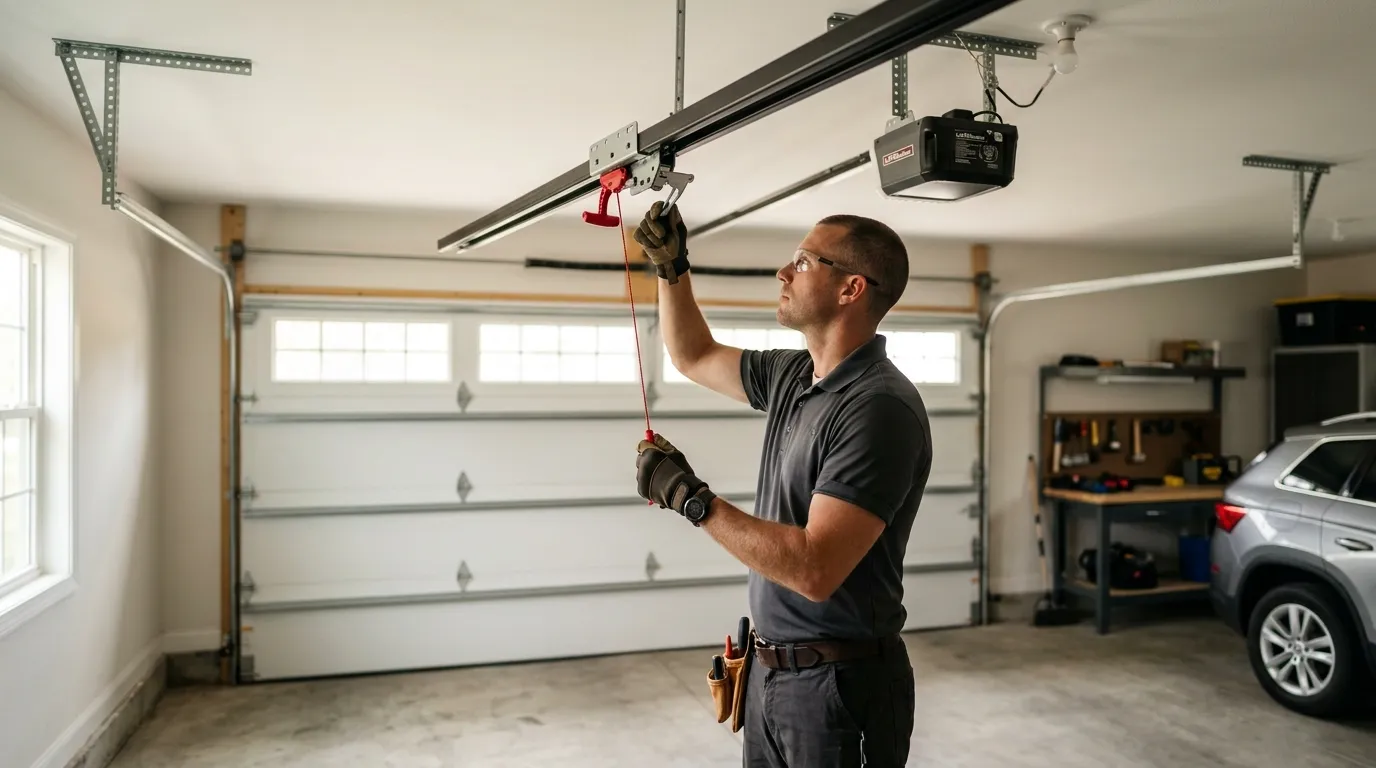
The other thing that goes wrong is guessing at spring weight from the old door instead of the new one - insulated doors weigh differently than the single-layer panel they're replacing, and the torsion spring has to match the new door, not the old habit.
Pricing
We don't quote a flat number here because door size, insulation level, and whatever framing work the opening needs all move the price, and none of that is knowable without seeing the house. What we can say is that Norwalk's median household income sits at $98,709, a bit below the wider service area's $113,204, and that shapes which doors most owners here end up choosing - mid-tier insulated steel is the common pick over higher-end wood-look composite lines, though plenty of houses go either way. If your opening needs reframing before the new door goes in, that adds a separate cost on top of the door itself, and we'll tell you that during the walk-through, not after the door's ordered. Get a firm number by having us look at the actual opening - anything else is a guess dressed up as a quote.
Timing
A straight swap - same-size opening, no framing changes, door and opener going in against hardware that's already square - moves faster than a job where we're correcting a jamb or upsizing the opening for a wider door. Houses from Norwalk's 1957-median era more often need that extra step than newer stock does, simply because the openings weren't built to current sectional-door standards in the first place. We won't know which kind of job yours is until we're standing in the garage with a tape measure. What we can tell you is that the framing check happens before the door is ordered, not after - so if extra time is needed, it gets built into the schedule up front instead of showing up as a surprise on install day.
Questions
It depends on the house. With a median build year of 1957 here, a lot of openings run narrower or shallower than what current sectional doors expect. We measure the actual opening before ordering anything, so if reframing is needed, you know before the door's on order, not after.
The service area sits in a mild temperate band, so extreme heat or cold isn't the driver most owners give for upgrading. Noise, weight, and finish durability tend to matter more locally than insulation for temperature alone.
We can shim for minor misalignment, but if the header or jamb needs to be rebuilt, that's carpentry work outside what we do. We'll flag it during the walk-through so you can line up that work before we hang the new door.
About 19 miles from Costa Mesa. We travel out for scheduled installs; we don't keep a branch or crew based in Norwalk itself.
Explore more
Ready when you are
Costa Mesa Garage Door Pros repairs and installs garage doors, springs and openers in Costa Mesa, CA and the surrounding area.