
Spring imbalance pattern
On a house from 1957, that's usually one stretched extension spring doing more work than its pair, or a roller track that's shifted slightly out of plumb after years of the slab settling underneath it.
Norwalk, Costa Mesa
Norwalk homes date mostly to 1957, a decade earlier than the rest of our service area. See what that means for spring wear, track alignment, and yearly upkeep.
The repair
A door built when most of Norwalk was framed out - around 1957 - is almost always a steel or wood single-panel unit on an extension spring system, sized to the two-car openings that were standard that year.
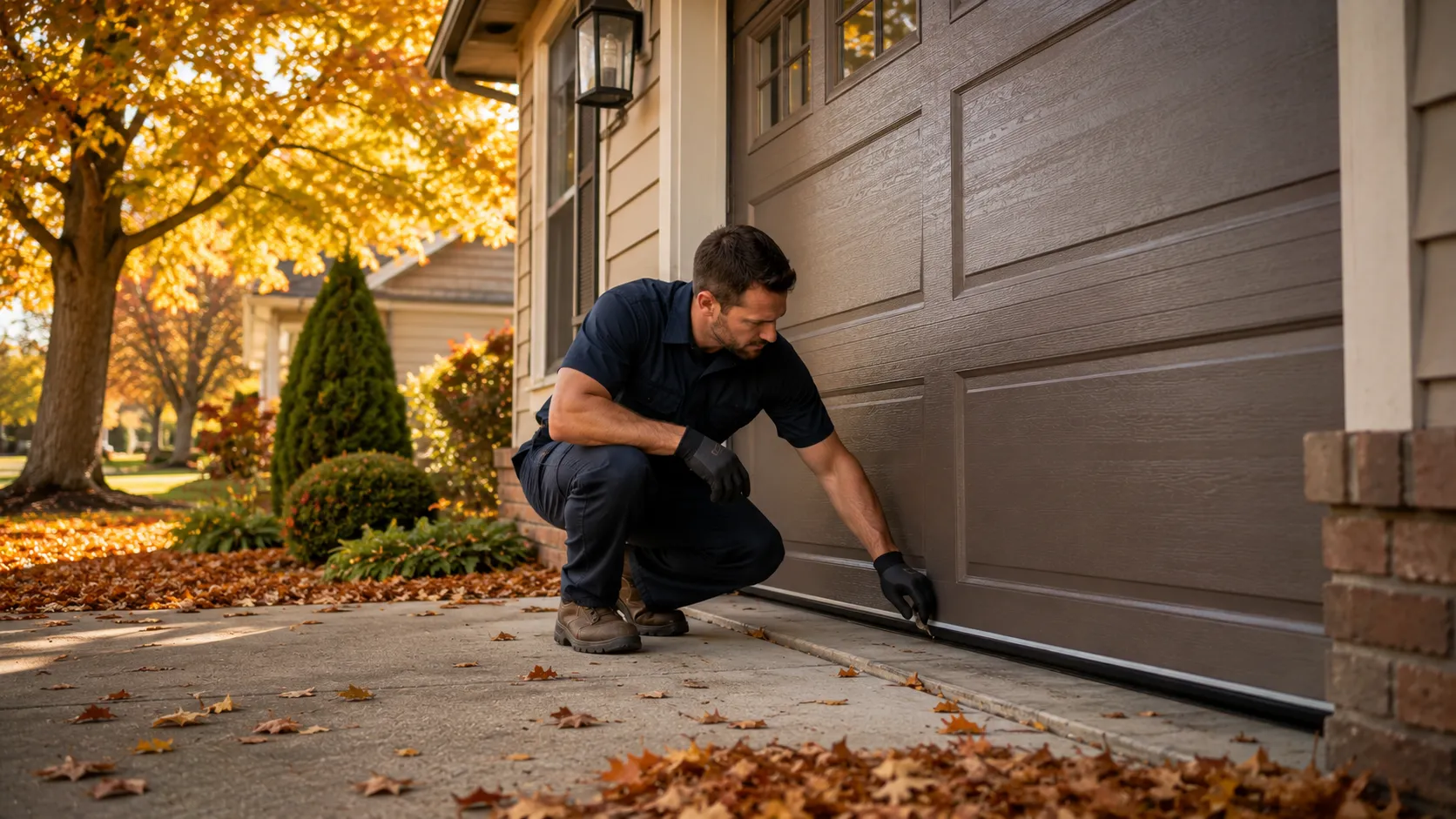
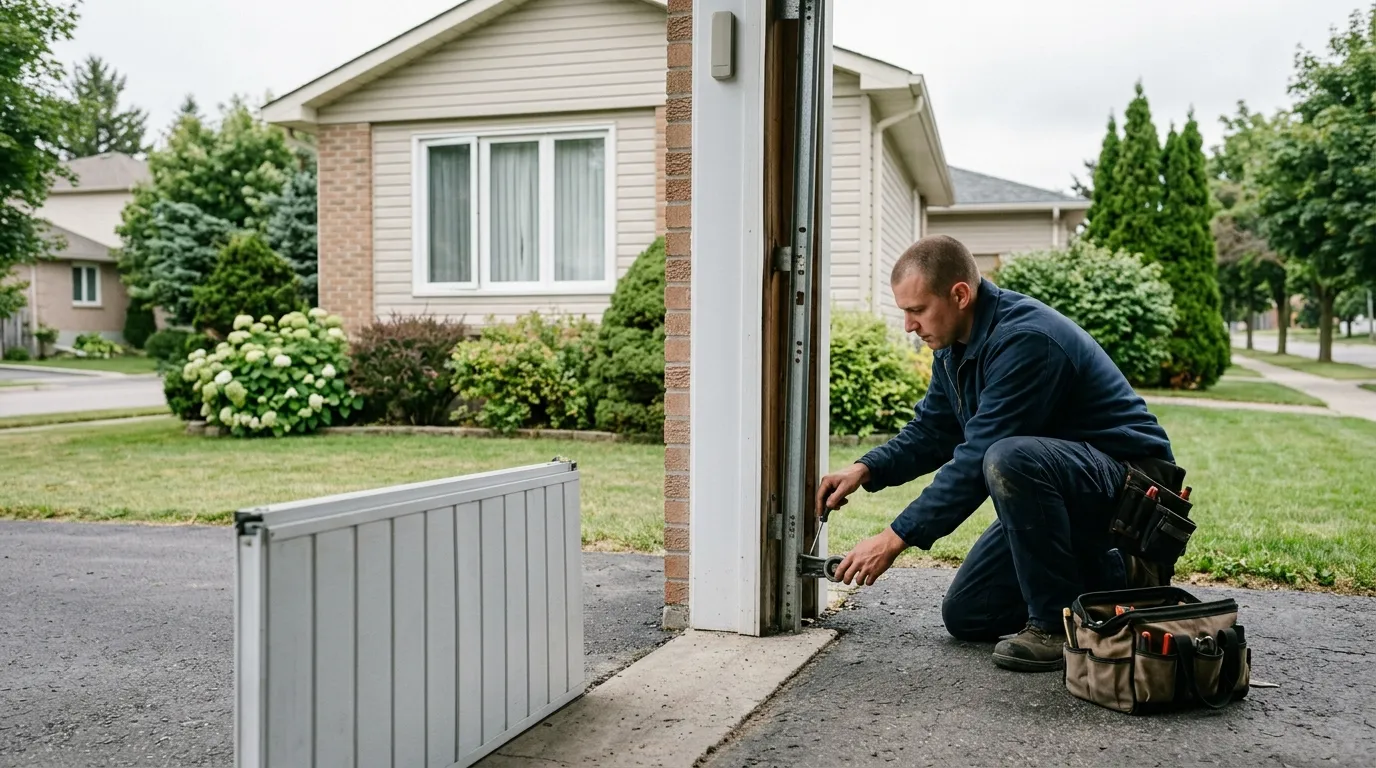
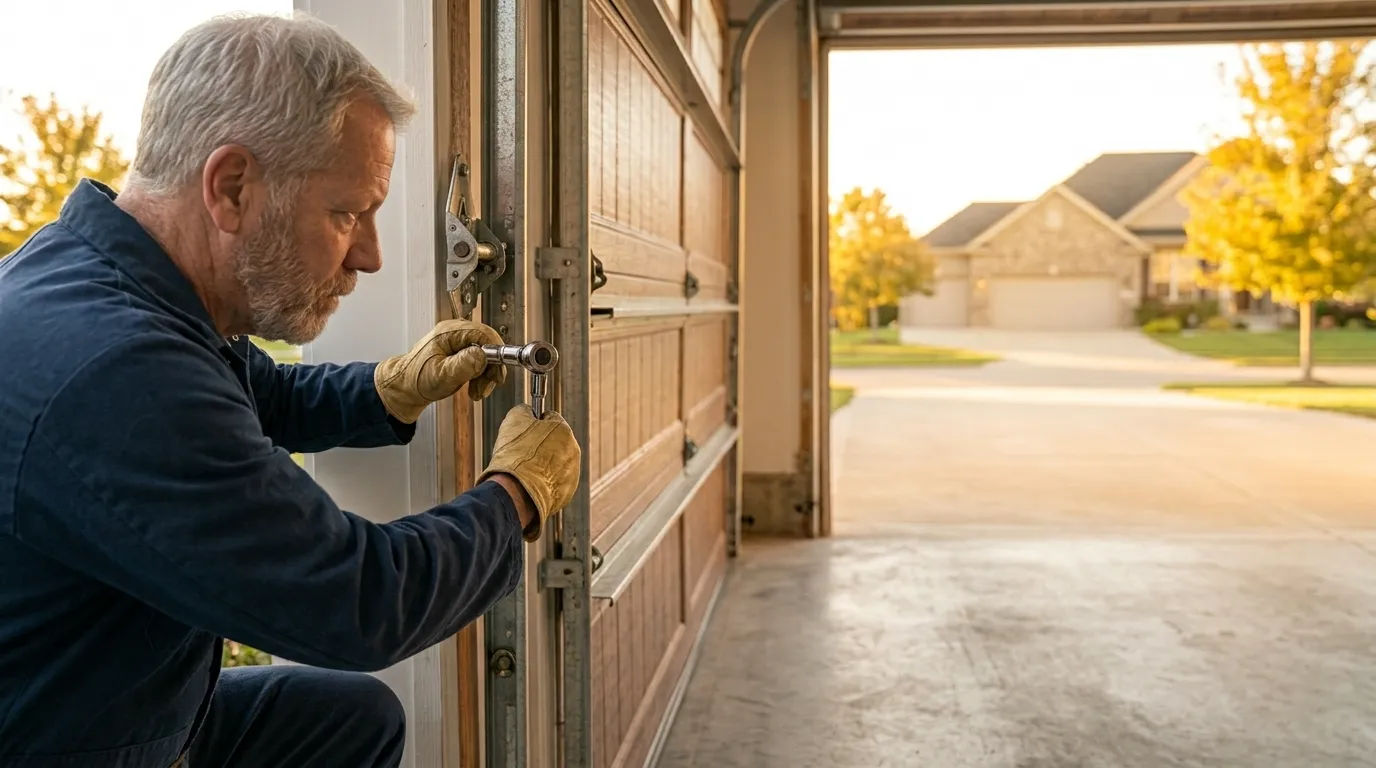
That's older hardware than what you'll find closer to Costa Mesa, where the service area's median build year runs to 1970. Maintenance on a door this age isn't the same job as tuning up a 1990s sectional door. It means checking hinges and rollers that have likely been swapped once or twice already, inspecting the extension springs for stretch and rust, and making sure the track hasn't been bent from decades of manual adjustment before openers were common on these homes.
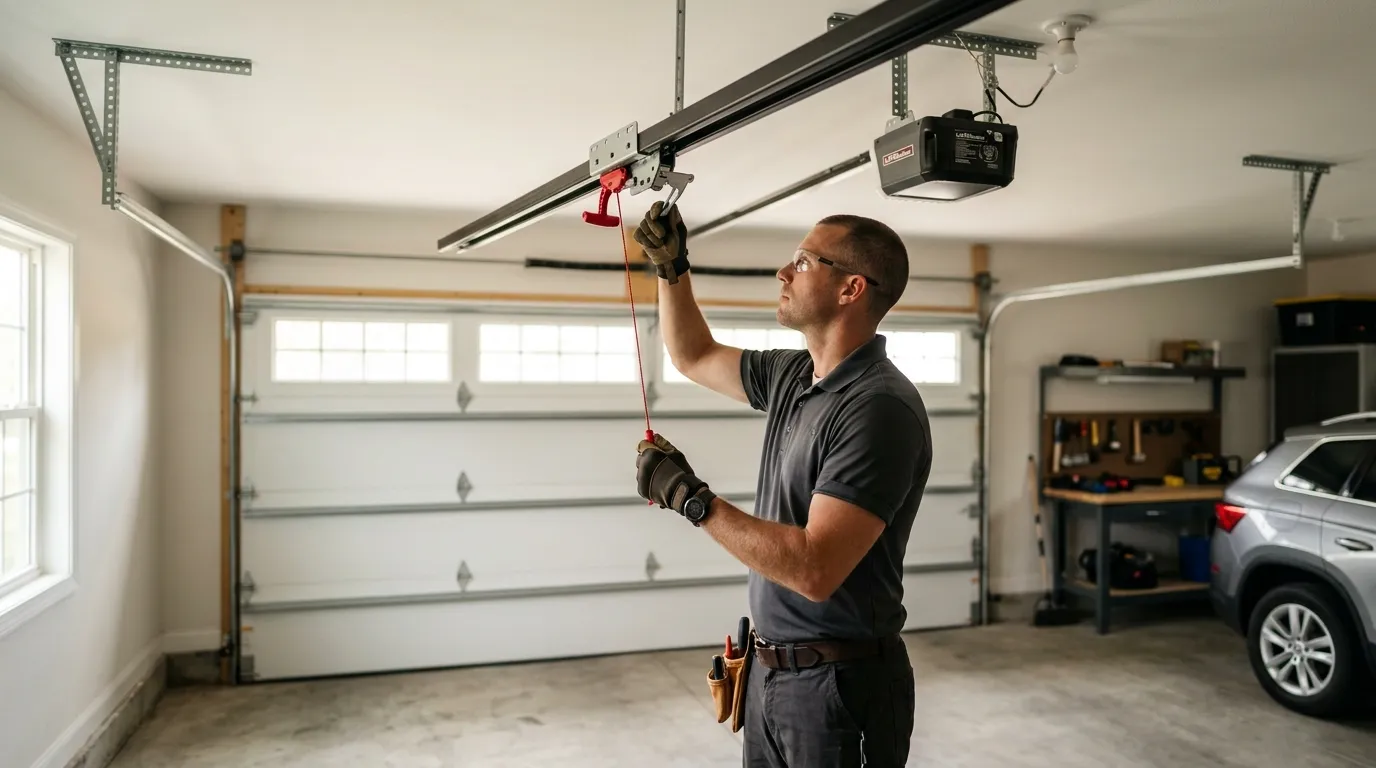
We lubricate the rollers and hinges, check cable fraying at the drum, tighten the header bracket, and test balance by hand - a door this old should still lift with one hand off the opener if the springs are doing their job.
We also look at the panel seams themselves, since steel from this era rusts from the inside out at the bottom corners first. This isn't a five-minute once-over. It's a full check of parts that were never designed to last seventy years without attention.
Symptoms
The complaint we hear most from this stretch of Norwalk isn't a door that won't open - it's a door that opens unevenly, dragging on one side or dropping the last foot instead of settling.
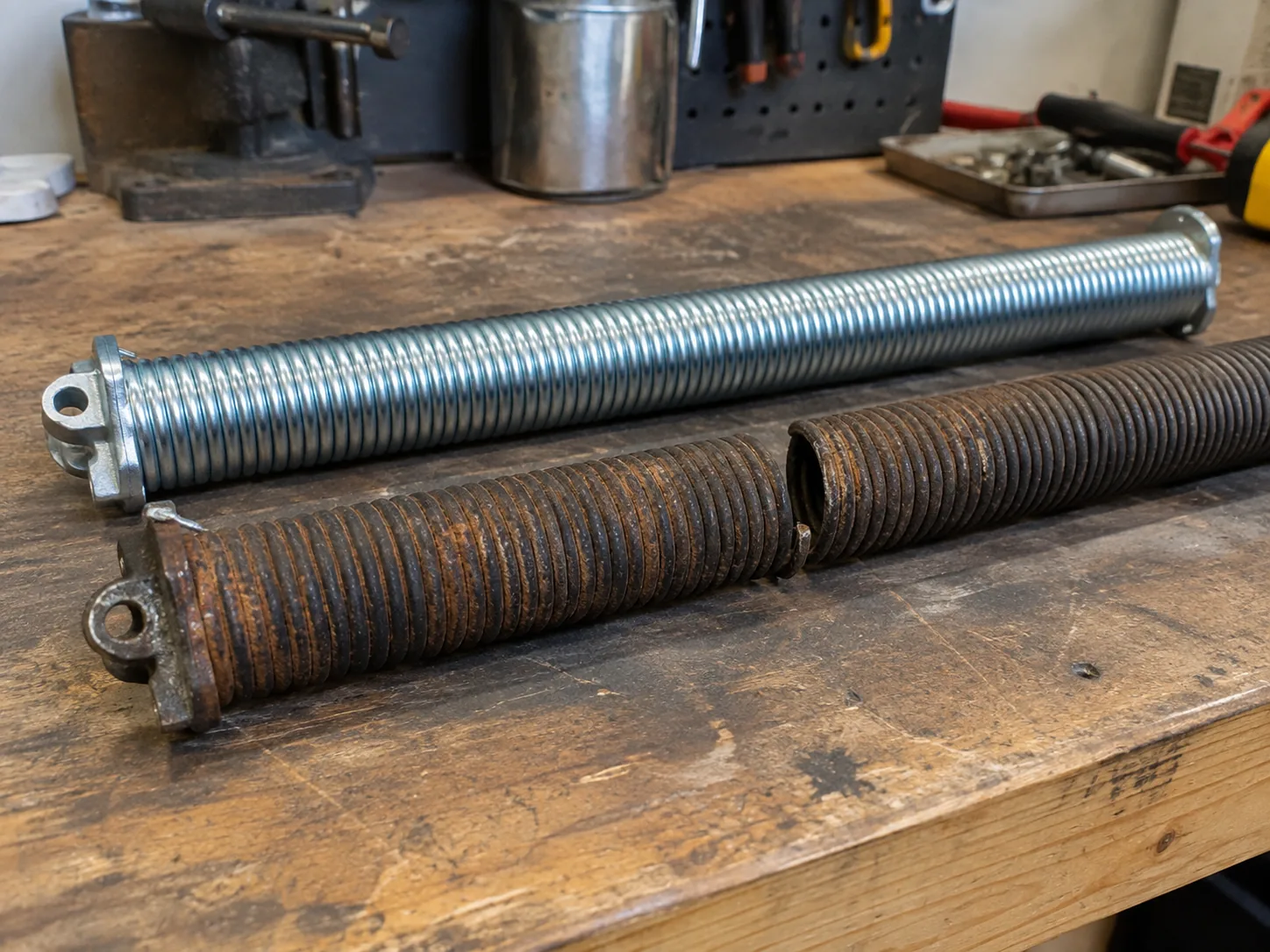
On a house from 1957, that's usually one stretched extension spring doing more work than its pair, or a roller track that's shifted slightly out of plumb after years of the slab settling underneath it.
Some owners notice the door creaking loudly through the whole cycle, which on hardware this age is often just dry rollers rather than anything structural. Others get a door that reverses partway up, which points to a spring imbalance rather than the opener itself. None of these show up overnight.
They build slowly enough that most people wait until the door won't close all the way before calling, at which point what started as a ten-minute lubrication job has become a spring replacement. Catching the drag early, while it's still just a sound or a slight lean, is the difference between a maintenance visit and a repair bill.
Watch-outs
On original 1957-era hardware, the failure that costs the most is a snapped extension spring with no containment cable running through it - older installs sometimes skipped that safety cable entirely, and a spring letting go under tension can send a coil hard enough to dent a car or a wall.
We check for that cable on every visit and add one where it's missing. Rust is the other issue specific to houses this age: steel panels from the late '50s weren't galvanized the way later doors were, so the bottom two feet of the door corrode from the inside where condensation collects, even in this mild coastal climate.
That corrosion weakens the panel at exactly the point where the roller bracket bolts through it, so a rusted bottom panel can eventually tear loose from its own hardware.
Track misalignment from decades of foundation settling is common too, and it wears rollers unevenly rather than all at once, so one side of the door often needs new rollers well before the other. None of this is unusual for a house this age - it's just what seventy-year-old steel and springs do if nobody's looked at them.
Pricing
We don't have a fixed number to quote here without seeing the door, and on hardware this old, price depends heavily on what a hands-on inspection turns up - a straightforward lubrication and balance check costs a lot less than swapping a rusted panel or adding missing safety cable to an old spring system. What we can tell you is that Norwalk's median household income runs lower than the wider service area's $113,204, which is worth knowing if a shop quotes you a full sectional replacement before checking whether the original door just needs new springs and rollers. On a door this age, replacement sometimes does make more sense than repair, especially once rust has reached the roller brackets - but that's a call we make after looking at the actual panel, not before.
Timing
A standard maintenance visit - lubrication, balance check, track and cable inspection, hardware tightening - takes under an hour once we're at the house. Norwalk is about 19 miles from our shop in Costa Mesa, the longest regular drive on our route, so we build that into scheduling rather than promising a same-day window we can't back up from that distance. If the inspection turns up a rusted panel corner or a spring that needs replacing outright, that's a second trip in most cases, since we carry common spring sizes but not every panel style still in service on 1957-era doors. We'll tell you on site if that's the case rather than leaving you guessing.
Questions
Once a year is a reasonable baseline for a door from the late '50s, more often if you're hearing new noise or seeing uneven movement. Original hardware from this era has more wear points than a modern sectional door, so small problems compound faster if they go unchecked for a couple of years.
Often yes, if the panel itself is sound. Rollers, cables, and even springs can be replaced on original hardware without touching the panel. Replacement only makes sense once rust has reached the structural points where brackets bolt through the steel - that's a judgment call we make in person.
No, we run out of Costa Mesa and drive to Norwalk for scheduled visits. It's about 19 miles, so we plan the trip rather than offering the same-day windows we can manage closer to the shop.
Explore more
Ready when you are
Costa Mesa Garage Door Pros repairs and installs garage doors, springs and openers in Costa Mesa, CA and the surrounding area.