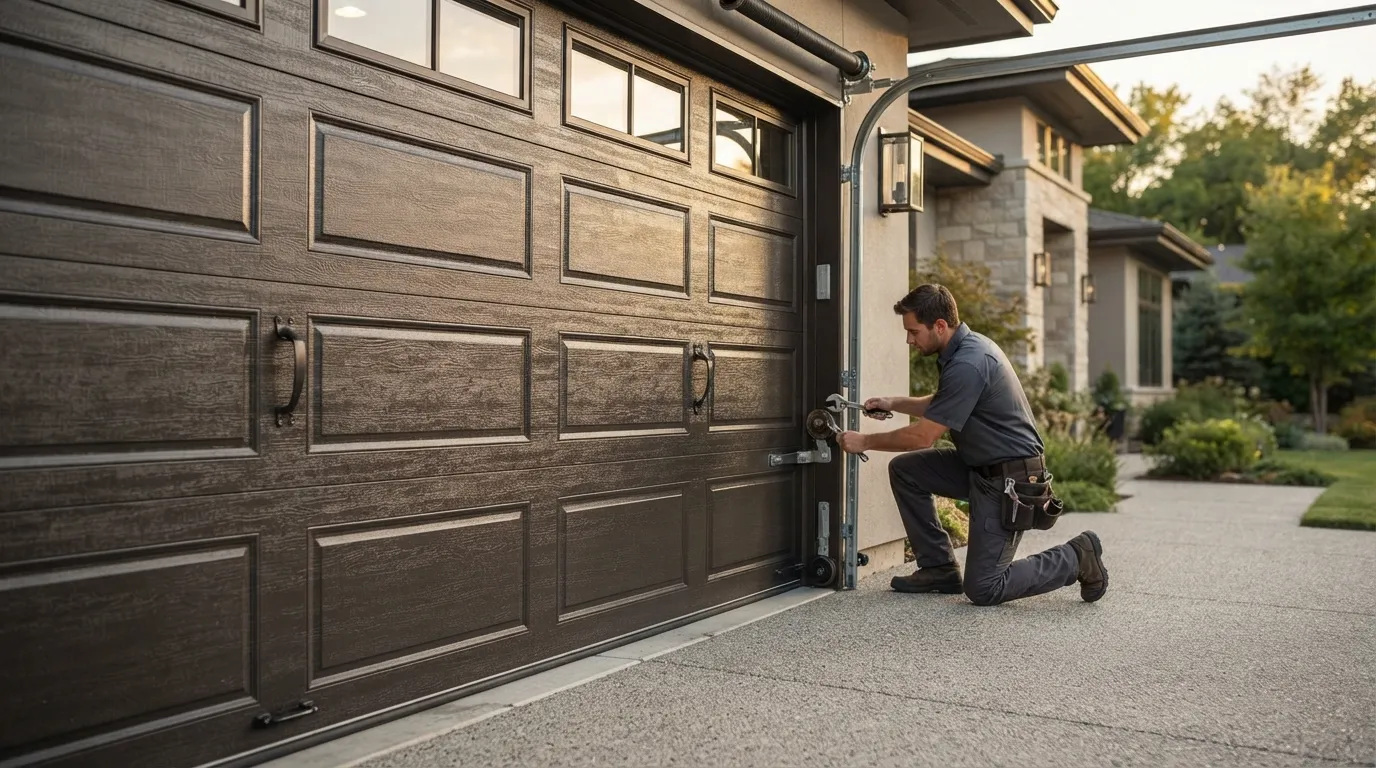
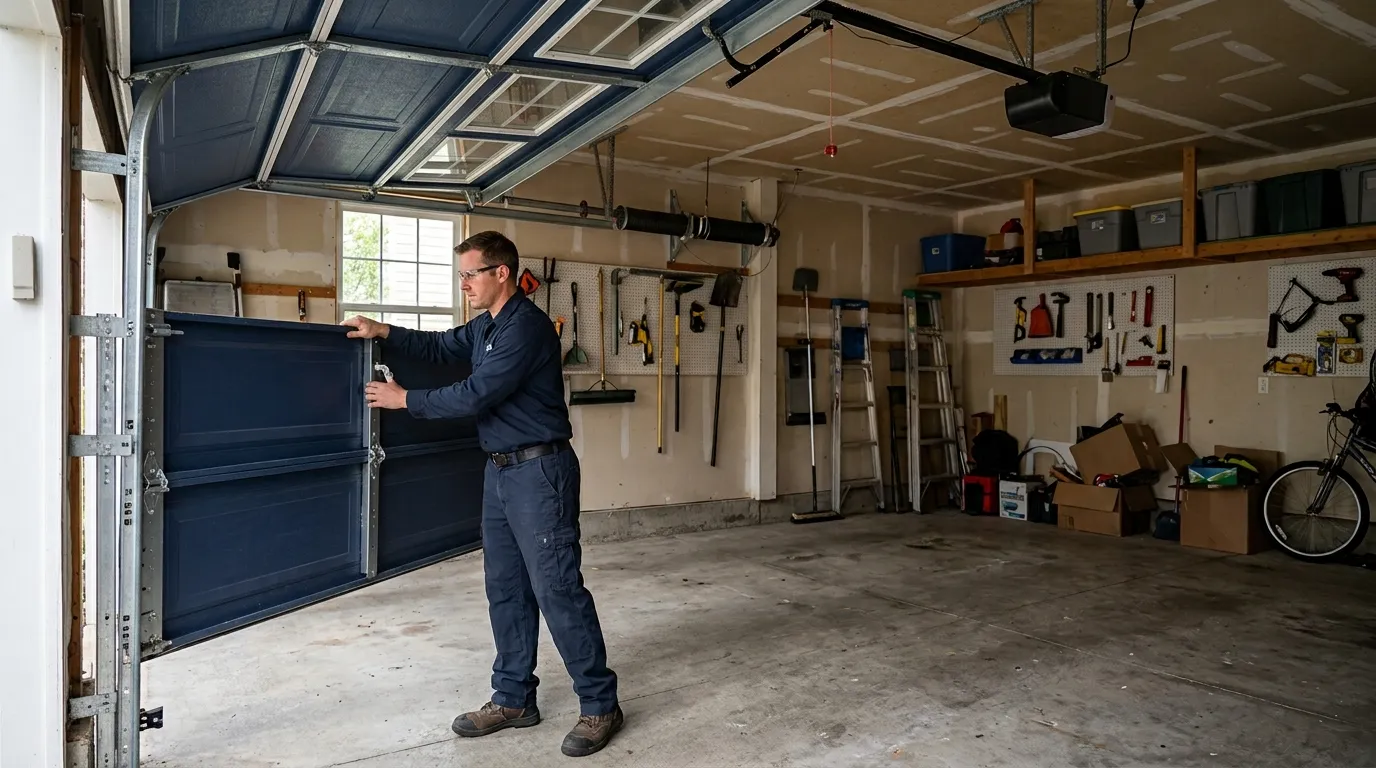
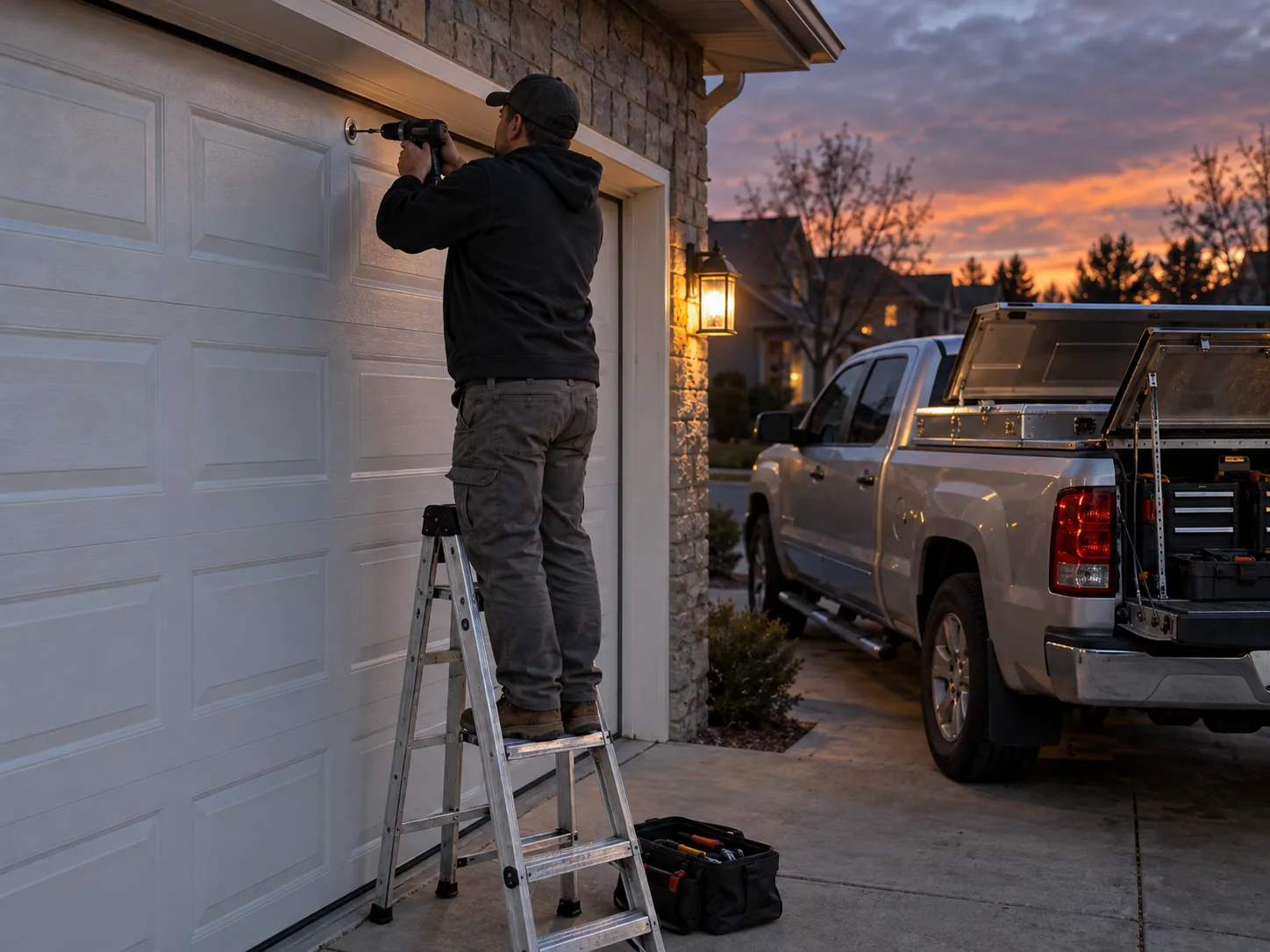
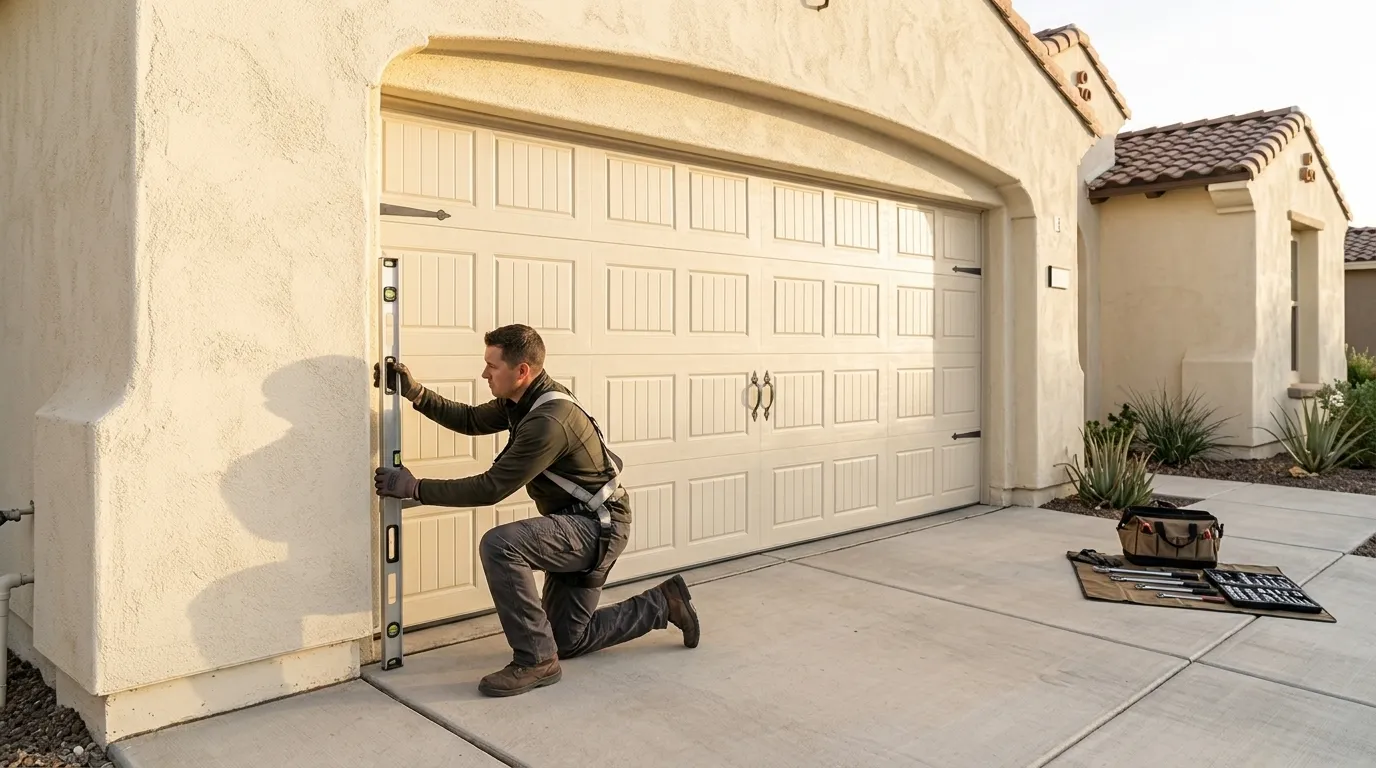
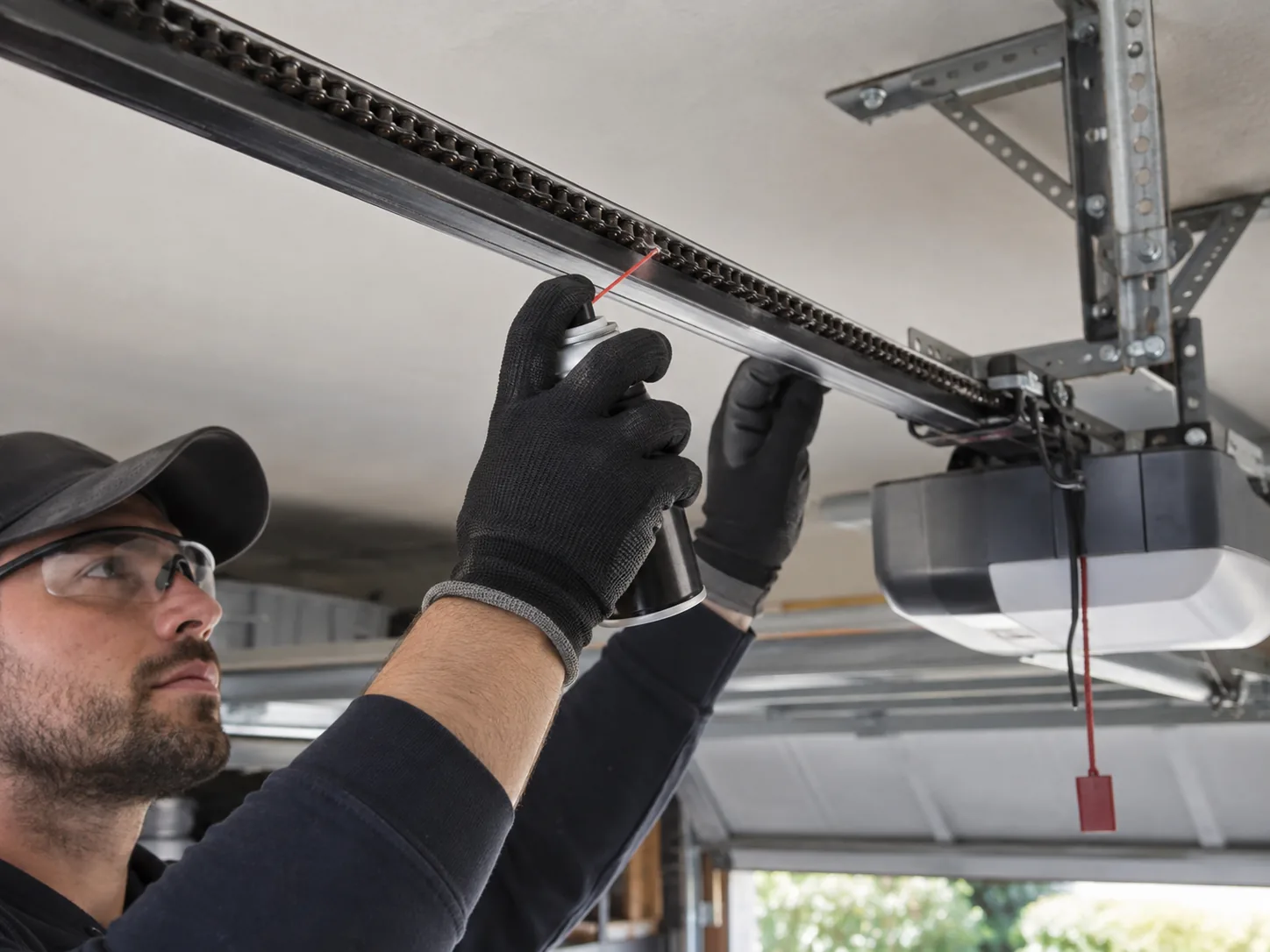
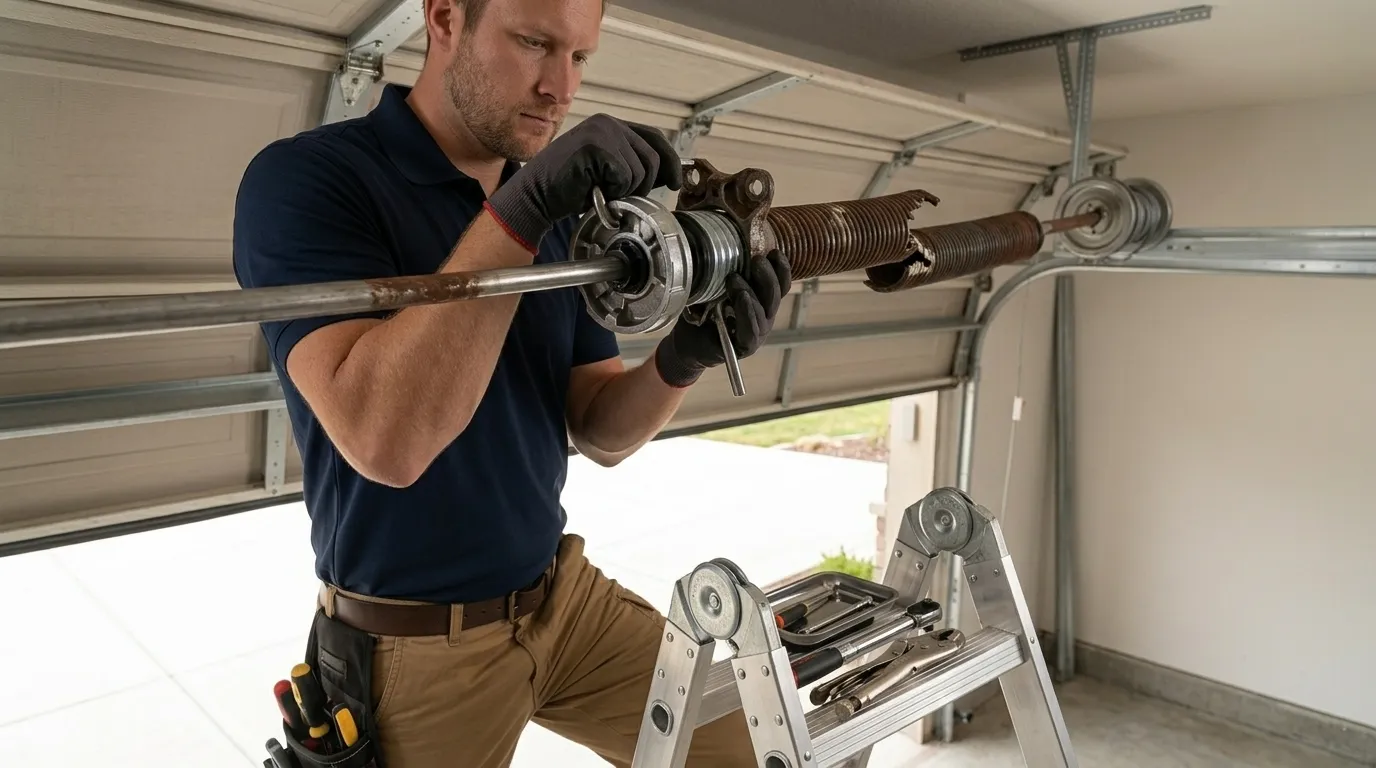
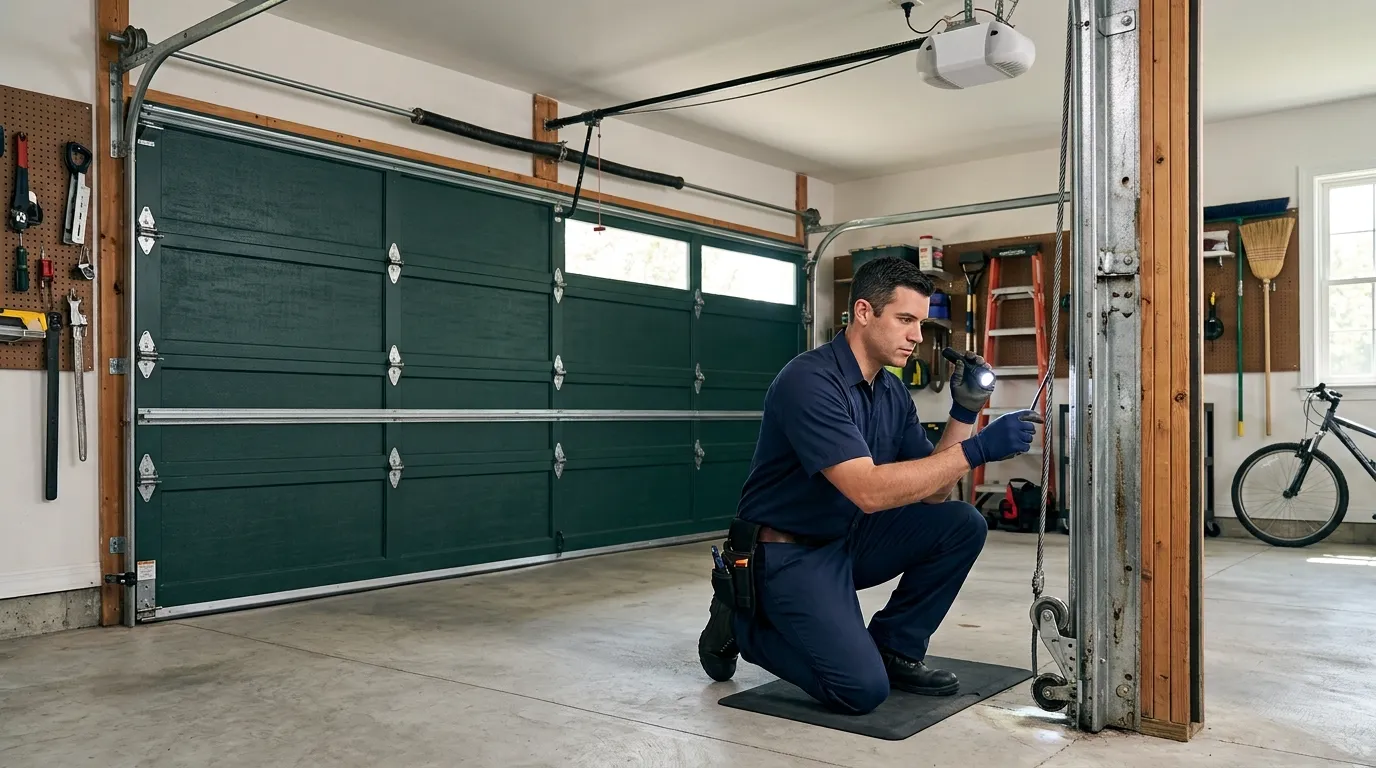
A lot of the commercial and light-industrial buildings clustered near Costa Mesa's older retail strips and side streets went up in the same build-out that produced the surrounding housing stock - construction here runs from 1938 to 2005, with the heaviest concentration landing in the 1960s and 70s. Doors and hardware installed during that wave are old enough now that replacement rollers, torsion springs rated for the original shaft size, or matching panel sections aren't always sitting on a shelf; some of it has to be sourced or substituted.
The climate plays a role too. This area sits in a mild temperate band, so we don't see the freeze-thaw cracking that wrecks doors in colder regions. What we do see is UV and thermal cycling - steel curtain doors and painted sectional panels facing west or south take daily heat-and-cool swings that dry out weatherstripping, loosen fasteners in the track brackets, and eventually leave springs working slightly out of the tension they were set at.
Add in daily commercial-cycle use - a bay door opening dozens of times a shift instead of twice a day like a house - and you get hardware that's carrying decades of age and heavier-than-residential wear at the same time. That combination is what shows up as the stuck, grinding, or hesitating door on the service call.