
Worn roller seizing
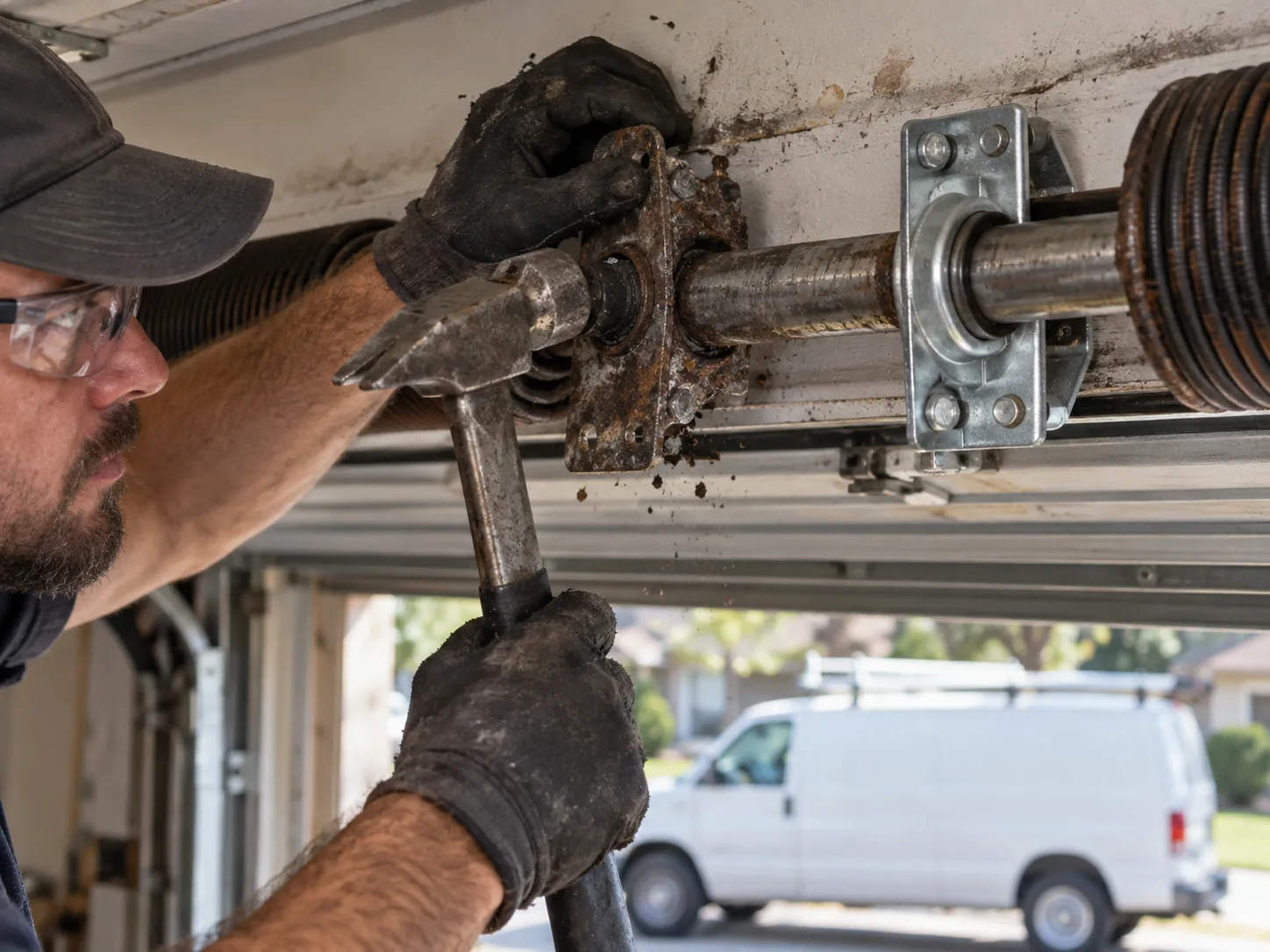
Rollers on original tracks tend to go next - steel rollers that were fine in 1974 are loud and pitted by now, and a pitted roller can walk a door off its track under the wrong stress.
Cerritos, Costa Mesa
Cerritos homeowners call Costa Mesa Garage Door Pros for broken springs and opener failures on doors built around 1974, 17 miles from our Costa Mesa shop.
Local causes
Cerritos sits about 17 miles from our Costa Mesa shop, which matters less for the drive itself than for what's waiting at the other end of it. The median home here dates to around 1974 - newer than a lot of what we see closer to base, but that just means a different failure window is opening now. A garage door and its hardware don't last forever no matter the decade; torsion springs rated for 1970s door weights are hitting 45-plus years of cycling, and the openers bolted on top of that original hardware (if they haven't been swapped already) are well past a normal service life. This isn't a weather story. The climate across our service area stays mild, so we're not chasing rust from coastal salt air or warped panels from freeze-thaw. What we're chasing is age and cycle count on doors that were installed when Nixon was in office. Every extra spring cycle on old torsion coils raises the odds of a clean snap instead of a slow give, and that's usually what turns into the call we get.
Watch-outs
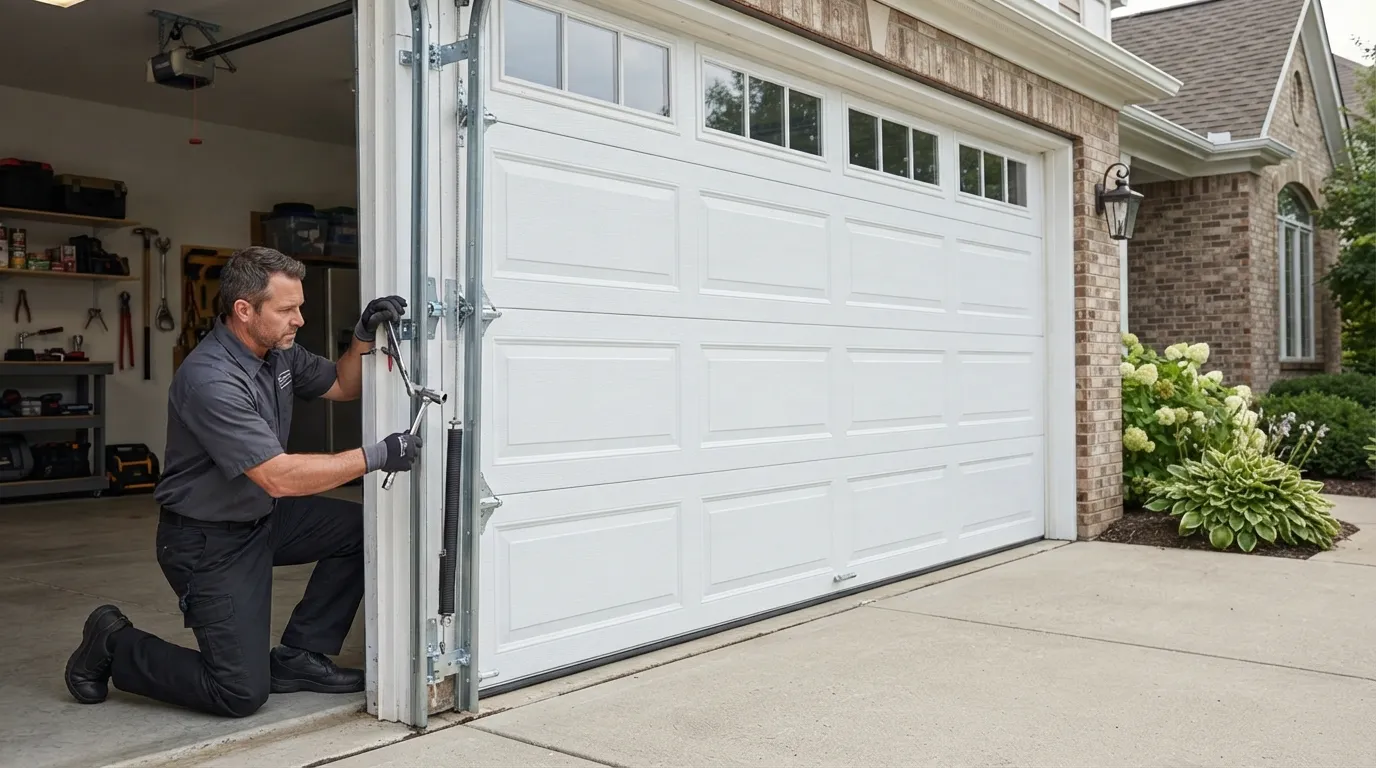
On a house from the early-to-mid 1970s, the two failures we see most are a broken torsion spring on a double door and a cable that's frayed through at the drum after decades of the same wear point taking the load.
Rollers on original tracks tend to go next - steel rollers that were fine in 1974 are loud and pitted by now, and a pitted roller can walk a door off its track under the wrong stress.
Openers from any later retrofit era have their own failure points: worn drive gears, a dying capacitor, a logic board that stops taking the remote. None of this is unique to any one street in Cerritos; it's unique to houses built in this window, and there are a lot of them here.
What we won't do is tell you a repair will hold when a spring's twin on the other side is the same age and just hasn't gone yet - replacing both sides at once, even though only one broke, is the honest call more often than not on a door this old.
Booking
We run this call from Costa Mesa, 17 miles out, so when you reach us we're figuring the route and the load before we figure the appointment. That distance is real and we don't pretend otherwise - we're not a Cerritos branch, we're a Costa Mesa truck making the drive. Tell us what the door's doing: won't open, opens partway and stops, comes down crooked. That description, plus knowing your house is roughly 1970s stock, lets us load the right spring size and cable length before we ever pull out of the lot instead of guessing on site. If the fix needs a part we don't carry - a specific opener logic board for a system nobody's made in years, say - we'll tell you that up front rather than string out a return visit.
On the truck
Given the age of housing stock feeding calls like this, the truck carries torsion springs sized for the standard door weights of the 1960s-70s build era, plus the more common double-door sizes that came after.
We stock steel rollers, standard-gauge lift cables, and drums to match - the parts that wear out first on a door that's been cycling since the Ford administration.
Opener parts are more of a mixed bag: universal drive gears and capacitors cover a lot of ground, but a rare or discontinued logic board sometimes has to be ordered rather than pulled off the shelf.
That's the one honest limit here - if your opener is an oddball model, the first visit is often diagnosis and the second is the fix, not because we don't want to finish in one trip but because the part isn't sitting on the truck.
Symptoms
Most of what brings people to the phone is one of a handful of things: the door won't budge and there's a loud bang that came first (that's usually the spring), the door reverses itself halfway up, or it's hanging crooked on one side because a cable let go. On houses from this era, a crooked door under load is not something to keep opening and closing - a stressed cable or an unbalanced spring can drop the door fast, and that's a hazard call, not a maintenance one. If the opener just clicks and does nothing, that's a different problem than a stuck door, and it changes what we bring. Either way, the fix depends more on what year the hardware actually is than on the model of car parked in front of it.
Questions
No. We work out of Costa Mesa, about 17 miles from Cerritos, and drive out for calls in this area. We're upfront about that distance rather than implying a local depot we don't have.
On a house built around 1974, the original torsion spring has been cycling for close to fifty years. Springs usually fail from fatigue, not a single event - the metal weakens over thousands of cycles and then gives on an ordinary day, which is why it feels sudden.
Depends on the part that failed. Drive gears and capacitors are common stock items. A specific logic board for a discontinued model sometimes has to be special-ordered, which can mean a second visit instead of one.
Our service area sits in a mild temperate band, so we're not dealing with the rust or freeze damage some regions see. Most failures we find are tied to age and cycle count on the hardware, not weather.
Explore more
Ready when you are
Costa Mesa Garage Door Pros repairs and installs garage doors, springs and openers in Costa Mesa, CA and the surrounding area.